About
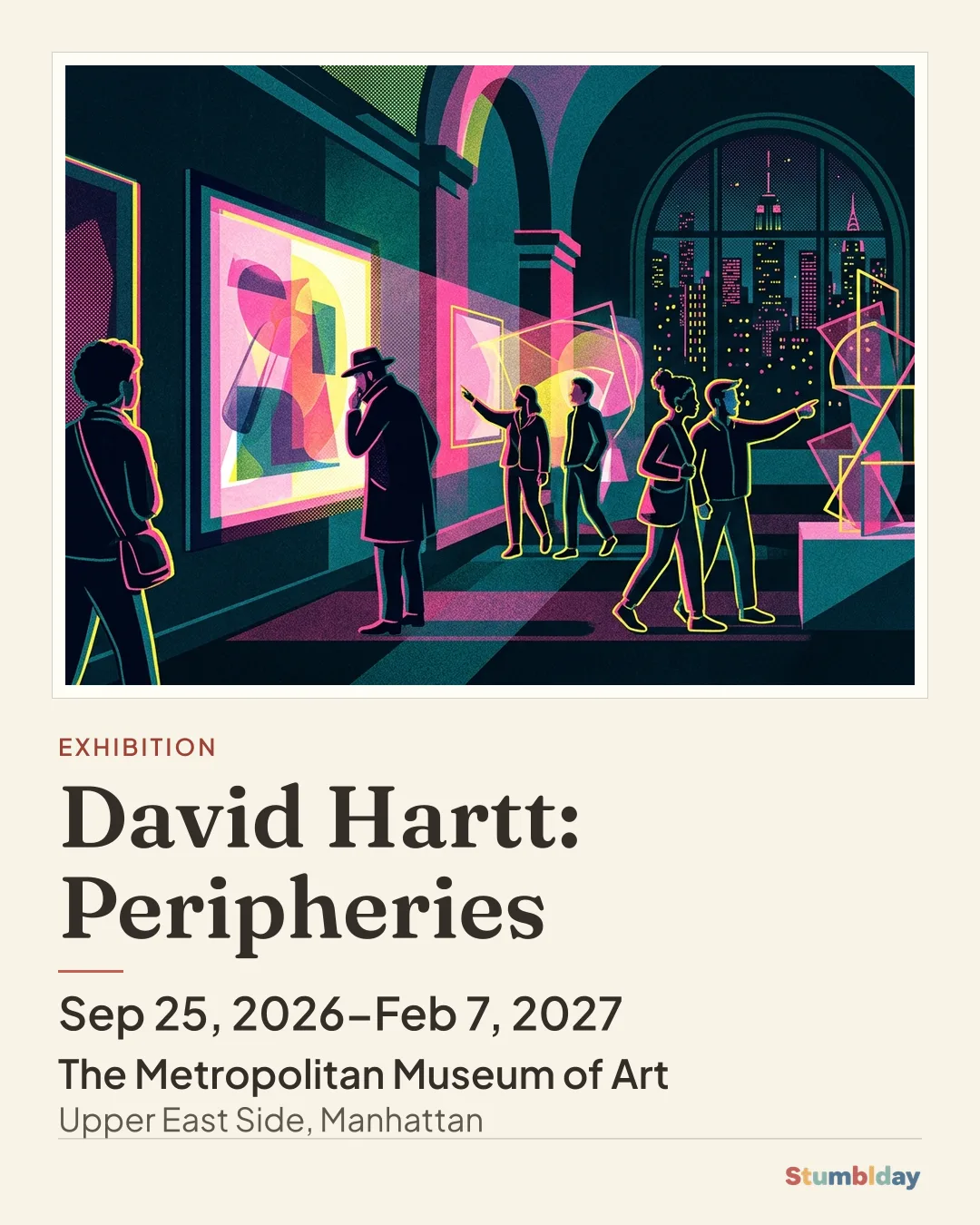
David Hartt turns The Met's 1819 panorama of Versailles into a moving film installation of Paris, scored by guitarist Jeff Parker.
John Vanderlyn's wraparound Versailles panorama is one of The Met's strangest treasures, and Canadian artist David Hartt answers it with film shot across Paris, from palace gardens out to the ring road. The installation pulls your eye from the grand center toward the city's margins, set to an original score by musician Jeff Parker. If you already love the panorama room, this is a new reason to go back.
What to expect
Expect a moving-image installation in the American Wing that plays off Vanderlyn's immersive painting, with shifting viewpoints and Parker's score filling the room. It works as a short, meditative stop inside a bigger Met visit.
Good to know
- Take the 4, 5 or 6 train to 86th Street and walk to Fifth Avenue.
- The installation is in Gallery 735 in the American Wing.
- No separate ticket is needed beyond Met admission.
- Pair it with the Vanderlyn panorama and the American Wing's period rooms.


Common questions
How long is Peripheries on view?
Sep 25, 2026 through Feb 7, 2027.
What painting does it respond to?
John Vanderlyn's Panoramic View of the Palace and Gardens of Versailles (1818–19).
Who composed the music?
Composer and musician Jeff Parker wrote an original score.